Ways to play
People of the Bible
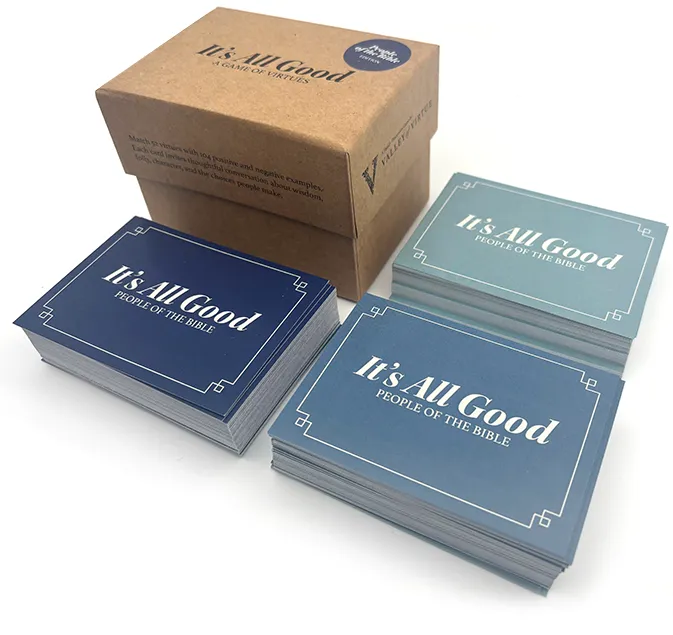
Good and bad examples drawn from the people of Scripture — from Josiah to Jonah.
This isn't a rulebook. Think of the cards as a starting point for activities and exercises about character — below are a handful to try, so pick whatever fits the ages and mood at your table. The one thread that runs through all of them: a card only counts when you can say one sentence about why it fits.
Learn the Virtues
“What does this word even mean — and what does it look like?”
The teaching framing: lower the floor for kids and newcomers who don’t know the words yet. Once the vocabulary is there, every other activity opens up.
Best for: Youngest players, classrooms, and anyone meeting the deck for the first time.
- Say it in your own words
Draw a virtue card, explain what it means, and give a real example from your own life.
- Four kinds of example
Draw a virtue card and give an example from your life, a movie, a book, or the Bible — the four places we find virtue all around us.
- Act it out Active
Charades or Pictionary for the virtue word — a fun change of pace for restless kids.
Name the Virtue
“What virtue is at work here — and can you make the case?”
The heart of every deck. Show an example, name the virtue, and say why. Because many examples fit more than one virtue, the case you make matters more than the answer itself.
Best for: All ages — the natural place to start, and the easiest way in for younger kids.
- Make the match Lively
Turn over a virtue card. Everyone plays the example card they think fits it best, then makes their case. The most convincing match takes the round.
- Just name it
Turn over an example card and name every virtue it shows — or, for a bad example, every virtue it fails. No winner; collect each answer someone can defend.
- Good or bad? Youngest
Shuffle the good and bad example cards together. Turn them over one at a time: is this a good example or a bad one — and which virtue is it about?
- Two sides of a virtue
Pick a virtue card, then find one good example and one bad example of it, and talk about what separates them.
- The surprising answer Quick
Turn over an example card. Everyone names a virtue for it at the same time — matching answers cancel out, so only the insight no one else thought of stands.
Weigh & Choose
“Put the virtues up against each other — which one matters most here?”
There's no correct answer; the reasoning is the whole point — and it gets surprisingly heated. A great way to discover what people quietly value most.
Best for: Teens and adults, youth groups, the dinner-table debate. Less suited to the youngest.
- For the job
Name the one virtue that matters most for a role — a babysitter, a pilot, the leader of a rescue mission, your kid’s best friend — and convince everyone you’re right.
- In a future spouse Teens
Which virtues would you most want in the person you marry? A favorite with teens — it makes the virtues concrete and personal without a word of lecturing.
- Head to head
Turn over two virtue cards, side by side. Which one matters more right now? Defend your pick.
- Rank them
Lay out three to five virtue cards and put them in order — most important, hardest to live, most needed this week. Everyone defends their order.
Made for this deck
Tell the Story
“What's the whole story behind this card?”
The line on the card is only the beginning. This leans on the one thing the Bible examples carry that nothing else does — a real, known account worth recalling and looking up.
Best for: Bible study, Sunday school, family scripture time. Scales by age, so the whole table can play together.
- Retell it
Turn over an example card and tell the whole story in your own words — what led up to it, what happened, how it turned out — then name the virtue it shows or the one it lacks.
- Open the Scriptures
Look up the verses printed on the card and read them together to fill in the details or settle a friendly disagreement.
- Everyone fills in All ages
Let the youngest tell the parts they remember and invite everyone else to add the rest. Recalling it together is the point.
Make It Personal
“Forget everyone else for a moment — where is this in your own life?”
The most honest framing in the deck: your own strengths, your own failings, your own growth. Turning the cards inward builds real trust at a table, which is why it works one-on-one as well as with the whole family.
Best for: Teens, adults, small groups, mentoring, families that already trust each other. It goes deep — not a cold-open icebreaker.
- Strengths and weaknesses
Name the virtue you think is your strongest and the one that’s your weakest. Let the others gently weigh in.
- A time I faced this
Draw an example card and share a moment you faced something like it — and how it went.
- The better version
Take a bad example card and describe what the virtuous version would have looked like — then a time you had your own chance to choose it.
- Where I’m working
Pick the virtue card you’re trying hardest to grow in right now, and say why it’s the one.
See It in Others
“Who around you lives this — and how can you help each other grow?”
The warm, affirming side of the deck. Where Make It Personal looks inward, this one looks at the people beside you — naming the good you see and helping one another along.
Best for: Families at dinner, classrooms, groups who already know each other well. Wonderful for building people up.
- You embody this
Deal everyone a few virtue cards. Hand one to someone at the table who shows that virtue — and tell them why you picked them.
- Someone I know
Turn over a virtue card; everyone names a person in their life who consistently lives it.
- The character of God Faith
Take the virtue cards one at a time and ask: does this one describe God the Father, Jesus, or both? Defend your answer — and notice the virtues that are surprisingly hard to place.
- Iron sharpening iron
Pick a virtue card and ask someone at the table how they might grow in it. You’re inviting their thoughts, not handing out advice.
Other ways to play
A few lighter, more game-like ideas — mix and match freely.
- Story builder · Virtue cards
Draw three virtues and invent a short scene that uses all of them — heroically, or terribly.
- Plays like Apples to Apples · Virtue + examples
Match example cards to a virtue and let a judge pick a favorite. For groups who already know the game.
- Virtue of the week · Virtue cards
Draw one virtue, post it on the fridge, and have the whole family try to live it. Revisit at the end of the week.
For Parents
A few ways to get the most out of the cards:
- Lean on the "why." The value is always in the explanation, not in being right. A child who can say why a card fits is doing the real work.
- Let answers stay open-ended. Many virtues can fit the same card. "I see it differently — here's why" is exactly the conversation you want.
- Adjust to your kids. With little ones, stick to the good examples and the gentler framings like Name the Virtue and Learn the Virtues. With older kids and teens, Weigh & Choose and Make It Personal go further.
- Treat it as a conversation starter, not a quiz. There is no answer key. The goal is to notice virtue, admire it, and want it.
- Mix the decks. Combine both for a bigger, richer pile when you want more variety.